
Craft
The making of a garment - construction, cloth, fit and the decisions that separate a suit that lasts thirty years from one that lasts three. Most of what determines whether a jacket works happens before anyone sees it: the canvas inside the chest, the way a shoulder is set, the cloth chosen for the climate it will be worn in. These are the pieces that get into that detail.
Why the details are worth the trouble
Almost nobody buys a suit on the strength of its canvas. People buy on colour, on price, and on how it looks in a shop mirror under lighting designed to flatter. Then they wear it for a year and discover that the chest has collapsed, the shoulder has never quite sat right, and the trousers have gone shiny where they shouldn't.
Everything in this section is an attempt to move those discoveries forward - to the point before you hand over the money rather than eighteen months after. None of it requires expertise. It requires knowing which two or three questions to ask, and recognising the answers that are really a change of subject.
Common questions
What is the difference between bespoke and made-to-measure?
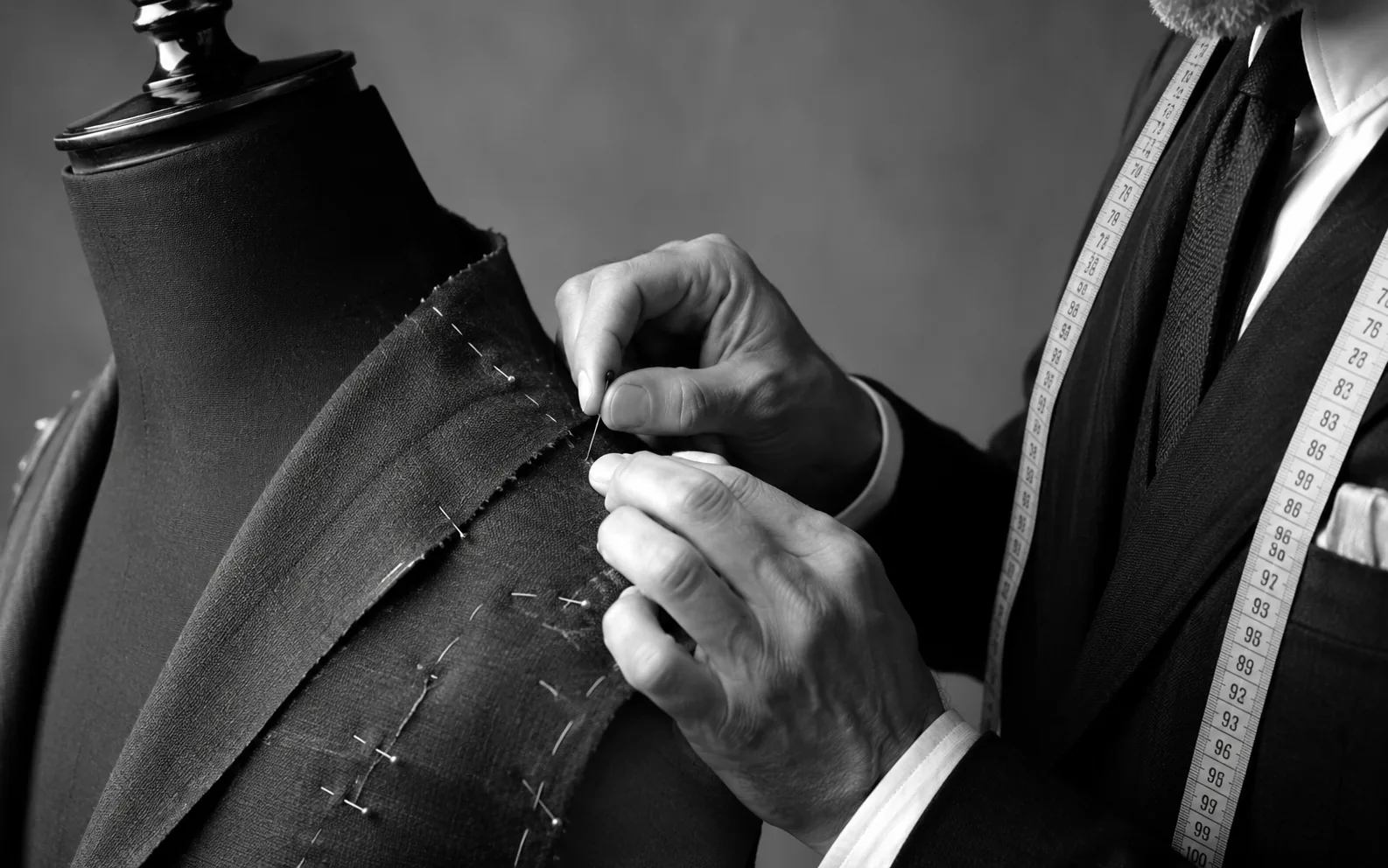
Bespoke means a pattern drafted for you alone, cut by hand, with a hand-padded canvas and several fittings along the way. Made-to-measure adjusts an existing block to your measurements, usually with a fused canvas. Made-to-measure done well fits far better than anything off a rack; it is simply a different product at a different price.
How long should a suit take to make?
A proper bespoke commission runs eight to twelve weeks and two or three fittings. Made-to-measure is typically three to six weeks. Anything offered inside a day has had no fitting worth the name, and the fitting is where most of the value sits.
What is a canvas and why does it matter?
The canvas is the internal layer that gives a jacket its shape across the chest. A floating canvas is stitched in and moulds to your body over time. A fused canvas is glued, which is cheaper, lighter and will never quite mould the same way. It is the single biggest difference between garments at similar prices.
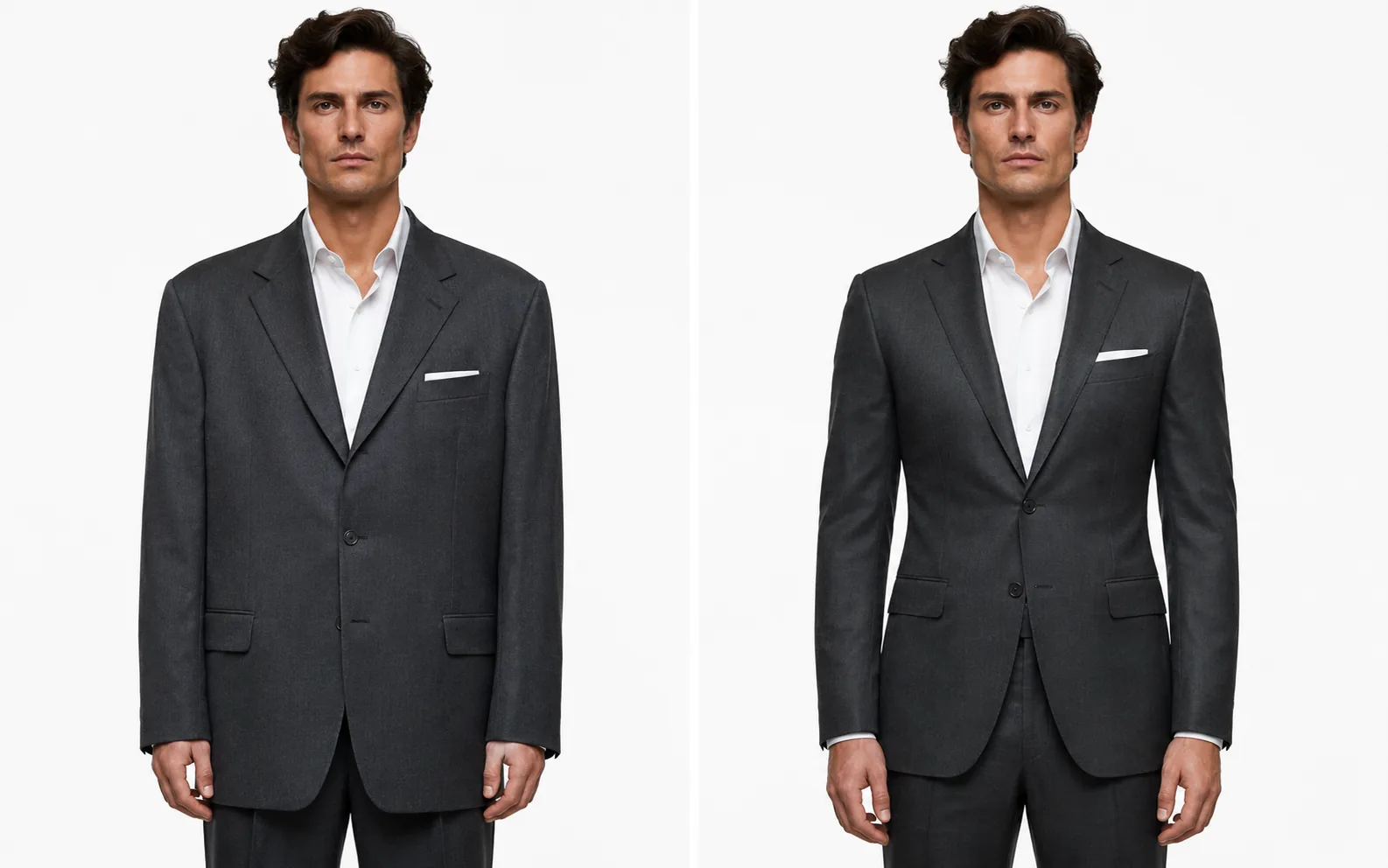
How many fittings should I expect?
Two at an absolute minimum, three is normal, and more for a first commission. The first fitting checks balance and fit through the body, the second refines it, and the last confirms sleeve and trouser length. A tailor who offers none is selling you a size, not a fit.